
Categories
Uncategorized

Reclaim Your Calm: Anxiety Relief & Relaxation Techniques

If you’re struggling with anxiety symptoms—racing thoughts, tight shoulders, trouble sleeping, or overwhelming worry—you’re not alone. These signs of anxiety are common, and many arrive seeking tools that bring real relief. I’m here to walk beside you.

Why Relaxation & Coping Strategies Matter?

Anxiety can hijack your nervous system, keeping you stuck in a cycle of fight-or-flight responses—racing heart, rapid breathing, irritability, and fatigue. That’s why mastering relaxation techniques, mindfulness, and CBT coping strategies is crucial. They help shift your mind and body from survival mode to a place of calm and safety. However, these techniques need repeated practice to allow your amygdala and nervous system to reduce the sense of hyper-stimulation that they may feel.

Stage 1: Grounding to Reduce Anxiety

Popular grounding tools include the 5-4-3-2-1 technique and sensory engagement. These are proven ways to bring awareness back to the present moment and ease acute stress and anxiety symptoms.

Try This: 5-4-3-2-1 Grounding Say out loud:
5 things you see,
4 things you feel,
3 things you hear,
2 things you smell,
1 thing you taste.

Allow your external curiosity to grow and go with it!

Stage 2: Breathing & Mindfulness

Diaphragmatic breathing and box breathing are core mindfulness techniques often used in CBT for anxiety.

Try This: Box Breathing: Breathe in 4 seconds,
Hold 4 seconds,
Breathe out 4 seconds,
Hold 4 seconds.
Repeat 4–6 times.

Remember in-between cycles to allow your breath to come back to normal.

Stage 3: Physical Tension Release

Progressive muscle relaxation (PMR) helps you notice and release muscle tension—commonly in the jaw, shoulders, and chest—reducing your anxiety triggers.

Try This: Clench and hold each muscle group (toes → jaw), then release, noticing the sensation of letting go. Noticing the difference between the clenching and releasing of muscles is key.

Stage 4: Using Guided Imagery or ‘Internal’ Visualization to Build Safe Space

Guided imagery or safe place visualization creates an internal refuge. This is a powerful anxiety coping technique when stress intensifies.

Try This: Close your eyes. Picture a safe place—beach, forest, room. Explore colours, textures, smells, and sounds. Use your imagination and your sensory abilities to connect with visualisations of sights and sounds that may come up.

Stage 5: Identifying Triggers & Thought Patterns

Deepening relaxation means digging into what fuels your worry—like work stress, social anxiety, caffeine, or lack of sleep. In therapy, we often use journaling, thought records, or CBT worksheets to track anxiety triggers, reduce avoidance, and reshape negative self-talk.

A Warm Invitation to Connect

If these tools resonate but you find relief still slipping away, that makes sense—many people need a bit more support. In my practice, I specialize in:

  • One-on-one anxiety therapy
  • CBT for anxiety, mindfulness training, and trauma-informed care
  • Helping you explore generalized anxiety disorder (GAD), social anxiety disorder, panic attacks, or situational anxiety

Together, we can build your personalized anxiety management toolkit—combining relaxation techniques, coping strategies, and therapeutic support.

Ready to Get Help?

You deserve a life with more calm, confidence, and freedom. If you’re searching for an anxiety therapist in person or online or need mental health services for anxiety, let’s connect. You can reach out to me here to book a free initial consultation.

You don’t have to face this alone—help is available, and you can reclaim your calm, one breath at a time.

Categories
Uncategorized

5 Practical Ways to Break Free from Rumination and Return to the Present Moment

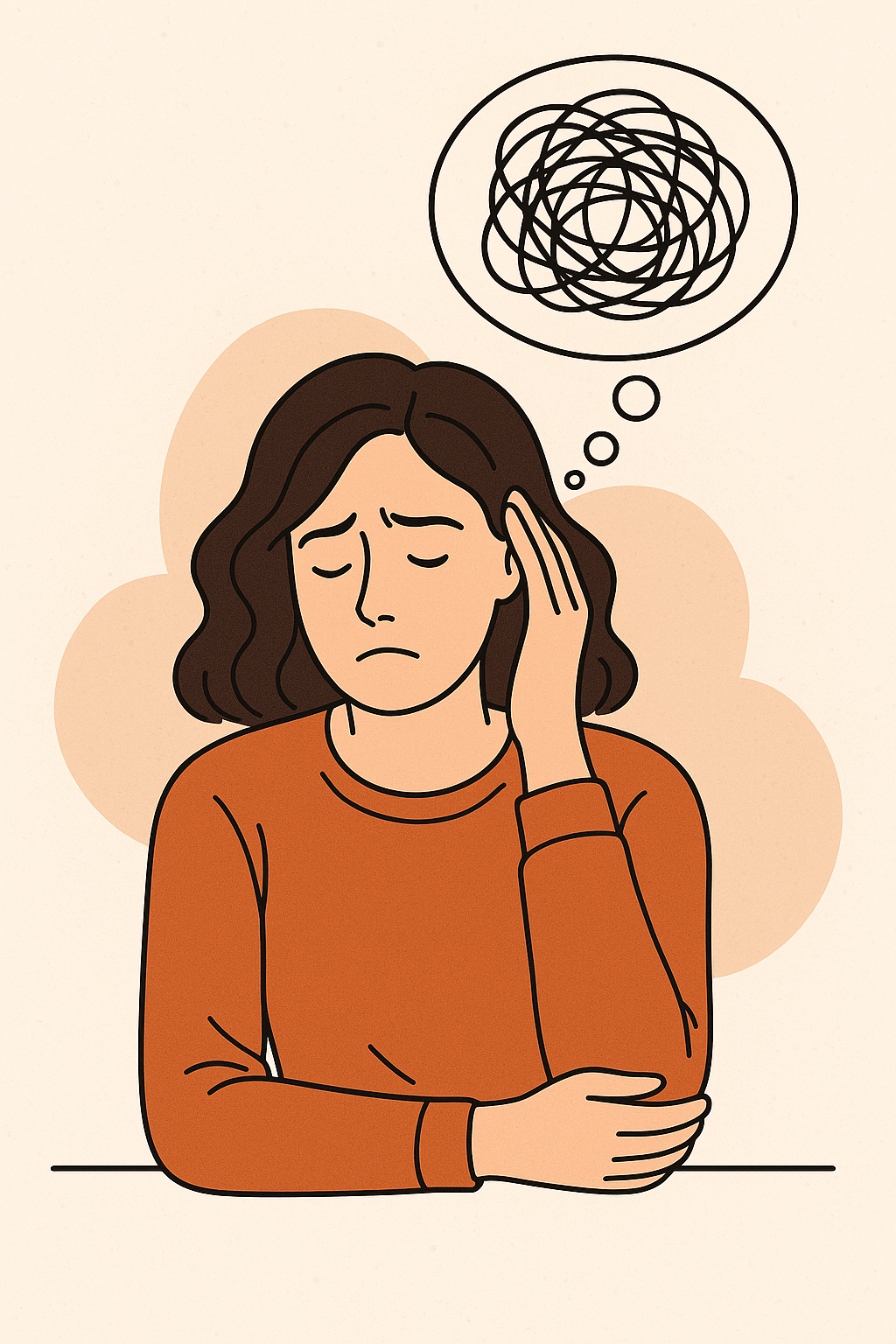
We’ve all experienced those moments when our minds become entangled in a web of overthinking. We replay past conversations, anticipate future mishaps, and attempt to solve problems that seem insurmountable. This mental loop, known as rumination, often masquerades as problem-solving but typically leads us further away from peace and clarity.

Rumination is a common companion of anxiety, convincing us that persistent thinking will bring relief. However, it often results in increased stress and a disconnection from the present moment. The good news is that there are gentle, effective strategies to help shift our focus from these unproductive thought patterns back to the here and now.

Here are five grounding tools designed to help you break free from rumination and reconnect with the present moment:

1. Feel Your Feet on the Ground

When your thoughts are racing, take a moment to shift your attention to your feet. Notice the sensations—the contact with the floor, the pressure, the temperature. Press your toes gently into the ground and observe the change in sensation.

Why it works: This practice anchors your awareness in your body, interrupting the cycle of overthinking. By focusing on physical sensations, you signal to your nervous system that you are present and safe.

2. Name Five Things You Can See

Engage your senses by looking around and naming five things you can see. Be specific: “the chipped mug on the table,” “the shadow on the wall,” “the blue of my jeans.” Saying them out loud can enhance the effect.

Why it works: This sensory grounding technique diverts your attention from internal thoughts to external stimuli, helping to break the cycle of rumination and bring you back to the present moment.

3. Place Your Hand on Your Heart

Gently place your hand over your heart and take a few deep breaths. As you do, offer yourself a kind phrase, such as, “This is hard right now, and I’m allowed to take a breath.”

Why it works: This gesture activates your body’s self-soothing system. Combining touch with compassionate words can calm the overactive parts of your brain associated with rumination, shifting you from self-criticism to self-support.

4. Set a 90-Second Timer

Next time you catch yourself ruminating, set a timer for 90 seconds. Allow your thoughts to flow freely during this time. When the timer ends, gently tell yourself, “I’ve heard you. Now I’m choosing to move on.” Then, engage in a different activity—stretch, play music, step outside, or message a friend.

Why it works: This technique provides a boundary for your rumination, acknowledging your thoughts without letting them take over. It empowers you to practice agency and redirect your focus to what you are doing and what matters to you.

5. Use Your Breath Intentionally

Try this breathing pattern: inhale for 4 counts, hold for 4, exhale for 6, and pause for 2 and then let your breath come back to normal. Repeat this cycle 3–4 times, visualizing your breath as a tide moving in and out.

Why it works: Lengthening your exhale activates the parasympathetic nervous system, responsible for rest and safety. This signals to your body that it’s okay to relax, helping to reduce anxiety and interrupt rumination.

Final Thoughts

Rumination can feel like quicksand—the more you struggle, the deeper you sink. It’s important to remember that you’re not alone in this experience, and it’s not a reflection of weakness. Often, rumination is a coping mechanism developed in response to past challenges, though the coping mechanism of rumination has become a hindrance now. Much like coping mechanisms, they may have worked in the past, but they don’t at this moment.

The tools shared here aren’t about “fixing” yourself; they’re about meeting yourself with kindness and presence. By gently guiding your attention back to the present moment, you create space for healing and peace.

Remember, you don’t need to have everything figured out right now. Sometimes, simply returning to the present is the most powerful step you can take.

Categories
Uncategorized

Rumination in Anxiety Has a Function. However, It Is Not Helpful

Rumination is much discussed and debated when anxiety states or when low moods are the topics of discussion. Ruminative thoughts are mainly and overwhelmingly negative in nature and are associated with threat, fear or rejection.

Rumination has a function albeit to lull us into a false sense of security that we are doing something to deal with a problem. However the truth is that it does not lead to a positive outcome and simply re-enforces further rumination as a habit and acts as a form of an emotional ‘crutch’ on which to lean upon.

Rumination leads to a loss of self-consciousness and a loss of connection to the here and now – the present, which is essential in keeping us emotionally and physically anchored into the world around us. Yet, to the affected individual, it feels like a behaviour pattern that gives them control, however, that control leads back into the same behaviour pattern. To someone caught up in the loop of ruminations, seeing beyond them is difficult. Which means that time gets distorted and the only intrinsic reward of rumination, is simply repeatedly doing the activity.

Control

When we ruminate, we fundamentally feel that we do not have control over ourselves. The process if typically aversive and unpleasant and whilst it may feel like ‘problem-solving’, the reality is that it simply re-enforces the fears and anxieties that are associated with it. In fact, the following statement sums up anxiety that is so closely associated with ruminations.

“Anxiety is like a rocking chair. It gives you something to do, but it does not get you far”. (Jody Picoult)

Rumination is also a selfish act where we simply reflect within ourselves. It is a process of looking inwards and pulling away from other people and over time this can be compounded by pulling away from the present and living in a fantasy state of disengagement.

Antidotes to Rumination

We know that rumination is intrinsically linked to anxiety states, cognitions and behaviours and therefore reducing the ‘pull’ of ruminations will have a significant knock-on effect in reducing anxiety. So what can be done?

Well, there are a number of things that act as an antidote to rumination. These include the following:

  • The Acceptance of Issues – this does not mean liking what may be happening, but accepting that it will pass through time and also accepting that there are choice points, however small or large which can produce a window of hope.
  • Staying in the Present and Engaging Creatively: Engaging with the here and now automatically stops the brain from going back into historical events or going forward into an unhelpful thinking pattern called ‘fortune telling’. Meanwhile, creativity follows similar patterns involved in rumination though it produces a more positive outcome. (As suggested, an individual will go through very similar stages of the preparation phase, the incubation phase, the ‘eureka moment’ and then the verification moment – stages closely associated with rumination. As suggested though, the outcome will be viewed more positively if there is a creative element to it).
  • Practising Mindfulness: This is a flow state where an individual is being at one with the present moment and is therefore immersed and engaged with the present. This is a much better process to overcome rumination and one example of such an activity includes knitting.  The individual is present, aware of their surroundings and in a flow state where they are stimulated by their feelings of touch and the texture of the items that they are working with. Within such an activity, action and awareness merge together.

In summary, the more rumination takes place, the greater the feelings of anxiety and the greater the desire to slip into ruminative cycles that ultimately lead nowhere. They create firing patterns in the brain, that if prolonged, become the default go to mechanism when threat, fear or rejection are detected or even perceived. Ultimately, they remove an individual from the present and lodge them into a state of hopelessness.

Categories
Uncategorized

Working Through Shame to Heal Anxiety

There’s a quiet, aching pain many people carry—one that says, “I’m not good enough,” “I’ve failed,” or “If people really knew me, they’d walk away.” This is the voice of shame. And when it whispers long enough, anxiety isn’t far behind. The two often move together—shame feeding anxiety, and anxiety reinforcing shame, until it feels like you’re trapped in a loop of self-doubt and fear.

If this sounds familiar, you’re not alone. So many of us live with a sense of being fundamentally flawed, often because of things we’ve experienced that were outside our control. Whether it’s childhood trauma, cultural or societal messages, or the wounds of past relationships, shame can take root in deep places. And when it does, it often shows up as anxiety: racing thoughts, overthinking, people-pleasing, panic, or the constant dread that something is about to go wrong.

Understanding the Link Between Shame and Anxiety

Shame is different from guilt. Guilt says, “I did something wrong.” Shame says, “I am wrong.” It’s more than just a feeling—it’s a belief about who we are. And when we believe we’re not enough or that we’re unworthy of love, our nervous system responds with anxiety. After all, if we’re flawed or broken, isn’t it only a matter of time before we’re judged, rejected, or left behind? So just behind shame, comes anxiety.

So we over-prepare. We try to be perfect. We avoid situations where we might feel exposed. We keep quiet even when we want to speak. Anxiety becomes the armour we wear to protect ourselves from the pain of shame. But the armour is heavy—and it never really keeps us safe. It just keeps us stuck and in a cycle that goes round and round.

Healing Begins with Compassion

The good news is that shame can’t survive empathy. And healing doesn’t come from fixing yourself—it comes from learning to be with yourself differently. Working through shame means turning toward the parts of you that feel broken and saying, “You are worthy. You are enough. Even here.”

I know that this is not always easy. Shame thrives in silence and secrecy. It tells us we shouldn’t talk about our feelings. That we’ll be a burden. That no one would understand. But the opposite is true—when we begin to name shame, to speak it aloud in safe and supportive spaces, its grip starts to loosen and we start to open windows within through which cleansing air can pass through.

Practical Tips for Working Through Shame and Reducing Anxiety

  1. Name It Gently: When you feel anxious, pause and ask yourself: “Is there a part of me that feels ashamed?” You don’t need to fix it—just notice. Naming shame helps bring it into the light, where it loses some of its power.
  2. Talk to Yourself Like Someone You Love: When shame flares up, try speaking to yourself like you would to a dear friend. Would you call them a failure for making a mistake? Would you tell them they’re unlovable? Begin practicing self-talk that’s kind, warm, and accepting—even when it feels unfamiliar. Be gentle and be kind to yourself.
  3. Write It Out: Journaling can be a powerful tool for releasing shame. Write to the part of you that feels afraid or unworthy. Ask what it needs. Let it speak. Over time, you may find those voices soften.
  4. Find Safe Connection: Shame shrinks in the presence of compassion. Whether it’s through therapy, support groups, or trusted friends, connection is one of the most healing forces. Being seen and accepted by others helps us start to accept ourselves.
  5. Practice Self-Compassion Daily: Simple things like placing a hand on your heart and saying: “This is a moment of suffering. Suffering is part of being human. May I be kind to myself in this moment,” can make a real difference. Small gestures like this can have a profound effect over time.
  6. Recognise Your Triggers with Curiosity, Not Judgment” If certain situations spike your anxiety, ask yourself: “What does this moment remind me of?” Often, shame is linked to early experiences. Approaching these insights with curiosity allows for deeper healing.

By Working Through Shame, You Are Becoming Your Best Self

If you’re working through shame and anxiety, please know: there is nothing wrong with you. You are not too much. You are not too sensitive. The feelings you carry make sense. And you don’t have to carry them alone.

Healing is not a straight line. It’s messy, tender, and deeply human. But as you begin to turn toward yourself with compassion rather than criticism, something shifts. The anxiety starts to ease. The shame begins to dissolve. And in its place, you’ll find space—space to breathe, to rest, and to be.

You are worthy of that space. You are worthy of peace.

Categories
Uncategorized

Working Through Health Anxiety – How Counselling Can Help You Reclaim Peace of Mind

Health anxiety, sometimes called illness anxiety disorder or hypochondriasis is more than just the occasional worry about getting sick. For many, it’s a constant hum of fear in the background of daily life. Every sensation in the body becomes a potential sign of something serious. A headache feels like a brain tumour. A flutter in the chest must mean a heart condition. It can be exhausting, overwhelming, and isolating. At the core of the condition is a heightened sense of anxiety allied with a fear of not being able to cope and with catastrophic thinking always being in the background.

If this sounds familiar, please know you are not alone and more importantly, there is support available. Counselling can play a crucial role in helping you find freedom from health anxiety, not just by managing the symptoms, but by understanding and gently unravelling the root of the issue.

Understanding the Root of Health Anxiety

One of the most powerful aspects of counselling is the space it offers to explore where your anxiety stems from. Health anxiety often isn’t just about the body, it is about something deeper. For some, it can be linked to a past experience of illness, either personally or involving a loved one. For others, it might be rooted in a fear of losing control or a generalised sense of vulnerability. Exploring the past can open a window into contextualising the fears and in helping to place them within a specific time context. This can help to slowly minimise the impact of the health anxieties.

In therapy, we gently work together to identify the underlying thoughts, memories, and experiences that may be fuelling your fears. When you begin to understand where your anxiety comes from, it becomes much easier to work with it, rather than feeling like you are constantly battling it.

Learning to Calm the Nervous System

Anxiety is not just a mental experience, it affects the entire body. When we are anxious, the nervous system kicks into a ‘fight’ or ‘flight’  mode. You might notice a racing heart, shortness of breath, nausea, or even dizziness. These sensations can then reinforce the cycle of fear and especially if you are already worried about your health. Counselling with our trained therapists in Counselling4Anxiety will also provide appropriate  tools and techniques that you can use to regulate your nervous system. Using these can also provide you with a sense of empowerment.

Counselling therefore helps you break this cycle by introducing simple, effective anxiety-reducing techniques to calm the body and mind.

Breathing exercises are a great place to start. One technique we often use is box breathing: inhale for four counts, hold for four, exhale for four, hold for four. This rhythmic breathing helps regulate your nervous system and sends a message to your brain that you are safe.

Another technique is visualisation. Guided imagery such as imagining a safe, calming place can help shift your focus away from anxious thoughts and reduce physical symptoms of stress. Over time, visualisation becomes a powerful tool you can return to whenever anxiety flares up.

Reframing Thoughts and Building a Healthier Mindset

Health anxiety thrives on what can be called ‘what if’ thinking: What if this headache is something serious? What if the doctor missed something? What if I can’t cope if I do get ill? Underlying this is a sense of vulnerability that feels life threatening or catastrophic.

In therapy, we work on cognitive restructuring, a technique from Cognitive Behavioural Therapy (CBT) that helps you identify and gently challenge these anxious thoughts. We don’t ignore them and we get curious about them. Is this thought based on evidence, or is it anxiety talking? Are there other, more balanced ways of looking at the situation? Is there evidence from your past experiences that can directly challenge the thoughts that make you anxious and which demonstrate that you can cope?

We also explore ways to nurture a more positive inner dialogue. This isn’t about toxic positivity or pretending everything is fine. It’s about developing a more compassionate and realistic way of thinking such as, “I have felt like this before and I got through it. My body is allowed to have sensations. I don’t need to jump to the worst-case scenario.”

This inner dialogue may well be a substantive change to the inner dialogue that underlies health anxiety and which goes something along the lines of, “My heart is racing and am I having a heart attack. I know that I have a problem and will my heart stop because I felt a pain in my chest the other day”. This dialogue does nothing to support inner resilience, and in many instances is not based on fact but on fortune telling allied to catastrophic thinking.

Creating a Toolbox for Daily Life

One of the goals of counselling is to help you build a personalised toolbox of strategies to use in your daily life. Alongside breathing and visualisation techniques, we might look at:

  • Grounding exercises to bring you out of your head and into the present moment
  • Mindfulness practices to help you observe your thoughts without getting swept away by them
  • Journaling to track patterns in your anxiety and celebrate small wins
  • Lifestyle tweaks like reducing screen time or caffeine to lower baseline stress levels

These tools not only help reduce anxiety in the moment, they help you build resilience over time. So there are many ways that can open up a path of hope and progress. The first step is to make that call for help and support. We are here to support you.

Categories
Uncategorized

The Hidden Trap of Avoidance: How Avoiding Fear Keeps Anxiety Alive

Anxiety has a way of making us believe that safety lies in avoidance. If social situations make you anxious, it might seem logical to stay home. If crowded spaces feel overwhelming, avoiding them might seem like the best option. If the mere thought of speaking up fills you with dread, staying quiet feels like the safest route. But what if the very thing that feels like relief is actually keeping your anxiety alive? This very thought goes counter the reactive way that our brains act when we feel anxious – they try and take us away from that very situation.

Avoidance is the silent force that sustains social anxiety, agoraphobia, and many other fears. It whispers, “Just stay away, and you won’t have to feel this discomfort.” But in reality, avoidance only strengthens anxiety, reinforcing the belief that the world is dangerous and that you are incapable of handling it. It weakens the sense of self, reduces any sense of self-resilience and capability and re-enforces a belief that the person cannot do the activity. Avoidance therefore keeps the loop of anxiety alive. 

The Cycle of Avoidance and Anxiety

Imagine you feel anxious about going to a social gathering. The thought of making small talk or being the center of attention feels unbearable, so you decide to stay home. In the moment, you feel relief. But what happens next time? The anxiety returns—maybe even stronger. Your brain has learned that avoidance “works” to relieve discomfort, so it becomes your go-to strategy. Over time, this avoidance solidifies, making social situations seem even more daunting.

This pattern applies to all kinds of fears. Someone with agoraphobia may avoid public spaces, gradually shrinking their world to only the “safe” places. Someone with a fear of driving may avoid roads altogether, reinforcing the idea that driving is dangerous. The more we avoid, the more powerful the fear becomes.

Avoidance Shrinks Your World

Anxiety convinces us that avoidance is protecting us, but in truth, it is limiting us. What starts as avoiding a few situations can quickly turn into avoiding entire parts of life—work opportunities, friendships, travel, or even stepping outside the home.

When we avoid, we don’t give ourselves the chance to learn that we can handle discomfort, that anxiety does not last forever, and that we are far more capable than we believe. Avoidance steals these opportunities for growth and keeps us stuck in a cycle of fear.

Breaking Free: Facing Fear With Compassion

The good news? The cycle of avoidance can be broken. It doesn’t have to be all at once or in overwhelming ways. The key is taking small, manageable steps toward what you fear, building confidence with each step.

  1. Start Small – If social anxiety keeps you isolated, begin with small, low-pressure interactions—chat with a cashier, send a text instead of avoiding conversation, or step outside for a short walk in a public space.
  2. Challenge Avoidant Thoughts – Notice when your mind tells you to avoid something. Ask yourself: “Is this situation truly dangerous, or is my anxiety making it feel that way?”
  3. Practice Tolerating Discomfort – Anxiety is uncomfortable, but it is not harmful. Sitting with discomfort instead of running from it helps retrain your brain to realize that anxiety passes.
  4. Seek Support – Overcoming avoidance is challenging, but you don’t have to do it alone. A therapist, counselor, or supportive friend can encourage and guide you through these steps.

You Are Stronger Than Anxiety

Avoidance makes us feel powerless, but every small step we take toward our fears builds resilience. The more we face what makes us anxious, the more we prove to ourselves that we can handle discomfort. Anxiety therefore does not have to control your life. With time, patience, and support, you can break free from avoidance and reclaim the life you deserve.

You are more capable than anxiety wants you to believe. Every time you challenge avoidance, you are taking back control and proving to yourself that you can live the life you want. Change takes time, but every step forward matters. You really to deserve a life free from fear, filled with opportunities, connections, and confidence.

Categories
Uncategorized

The Power of Positive Self-Talk: A Game Changer for Anxiety

Anxiety has a way of sneaking into your thoughts, whispering worries and planting doubts that feel all too real. “What if I mess up?” “I’m not strong enough.” “Everyone else seems to have it together—why can’t I?” If this inner dialogue sounds familiar, you’re not alone. Anxiety thrives on negative self-talk, keeping you stuck in a cycle of fear and self-doubt. In the end, the emotional fears and physical feelings that come with anxiety can be changed, by reframing the self-talk that we all carry out on a daily basis.

And here’s the thing—just because your mind tells you something doesn’t make it true. And the good news? You have the power to shift that inner voice into something far more kind, compassionate, and supportive. This isn’t about pretending everything is perfect. It’s about learning to talk to yourself in a way that eases your anxiety rather than fuels it and in acknowledging what you can do, what you can achieve and what you have gone through in the past. Viewing these events through a self-compassionate lens can also be an antidote to anxiety and stress.

The Power of Self-Talk

Think about it—if someone spoke to you the way anxiety does, constantly doubting you and making you feel small, you wouldn’t want to be around them, right? So why should we accept that from ourselves? The words you say to yourself matter. They shape how you feel, how you react, and how you move through life. The more we practice speaking to ourselves with understanding and encouragement, the more we can break free from anxiety’s grip.

Never under-estimate the power of positive self-talk which can carry you through anxious situations and ensure that you can relearn that anxiety is not life altering or catastrophic. It simply passes and can be worked through. This is where the body and the mind relearns.

How to Shift Your Inner Dialogue

This isn’t about forcing positivity or pretending hard things aren’t hard. It’s about shifting towards a voice that supports you rather than tears you down. Here’s how you can start:

1. Notice When Anxiety Speaks Up

That anxious voice? It’s sneaky. It often runs in the background without us even realizing it. Pay attention. What’s the story your mind is telling you? Is it saying you’re not capable? That you’ll fail? That people will judge you? Simply noticing these thoughts is the first step in changing them.

2. Question the Thought

Anxiety can feel so convincing, but it’s not always truthful. When a negative thought pops up, pause and ask: Is this really true? Would I say this to a friend? Is there another way to look at this? More often than not, you’ll find that anxiety is exaggerating things, not giving you the full picture.

3. Reframe It with Compassion

Instead of saying, “I can’t handle this,” try: “This is tough, but I’ve gotten through tough things before.” Instead of, “I always mess up,” say: “I make mistakes like everyone else, and that’s okay.” Shifting your words, even slightly, can start to rewire how you see yourself.

4. Be Your Own Friend

Imagine your best friend is struggling. Would you tell them they’re failing, that they’ll never get better, or that they’re not enough? Of course not! You’d remind them of their strengths, their progress, and how much they matter. You deserve that same kindness from yourself.

5. Choose Affirmations That Feel Real

Affirmations don’t have to be over-the-top to be effective. If “I am fearless and unstoppable” feels forced, go for something more grounded: “I am learning to handle challenges with more ease,” or “I am doing my best, and that’s enough.” The key is to choose words that feel genuine to you.

6. Practice, Practice, Practice

Like any new habit, this takes time. Set reminders, write down positive statements, or even say them out loud. The more you do it, the more natural it will feel. One day, you’ll catch yourself speaking to yourself with kindness without even thinking about it.

You Deserve a Kinder Inner Voice

Anxiety might always try to pull you into doubt, but you don’t have to believe everything it says. You have a voice inside you that is stronger, wiser, and far more compassionate—you just have to give it a chance to speak.

The next time that anxious voice creeps in, pause. Take a breath. And remind yourself: I am more capable than I give myself credit for. Because you ultimately are.

Categories
Uncategorized

Progressive Muscle Relaxation – The Natural anti-Anxiety Pill

Progressive Muscle Relaxation is also known as PMR and is one of the main tools that can be used as a natural remedy to reduce anxiety and panic in people. So, why reach out for the medicinal cabinet when some practice and training with PMR may do the same thing, without the possibility of side-effects that are part and parcel of using medications.

So have you ever thought of popping an anti-anxiety pill but don’t want to try medication? Well, for some ‘Progressive Muscle Relaxation’ (PMR) has become the ‘go-to’ technique that acts like an anti-anxiety pill when it is regularly practised.

The fact is that a body cannot be anxious and in a state of relaxation at the same time, so working to relax sets of muscles in the body acts as a counter to any anxiety and muscle contraction building up in the body. So Progressive Muscle Relaxation can be regarded as the brake to the accelerator of anxiety and panic.

By working on the following technique that was developed by Joseph Wolpe (1958), anxiety can be reduced however, it involves practising twice a day for about 15-20 minutes for 2 weeks. Consistency of practice is therefore key to its success in countering anxiety.

So, why don’t you try the following!

Take a seat and get comfortable. Place your feet firmly on the floor and consider 5 major muscles that you may want to tense for 5-7 seconds and then to relax for 10-15 seconds.

The key here is to really engage with the muscle relaxation and to feel the sensations of the relaxation. You may also choose to use word visualisations that can assist in the relaxation process by imagining the term ‘relax’ moving from your scalp to the relevant muscle area. The key here is to really engage with the relaxation of the muscle and to feel it, sense it, and engage with the relaxation as much as possible.

So for example, let’s try some major muscle groups that people can relate to and which can be easily felt as they tense and relax. In light of this, why don’t you consider tensing and relaxing your:

1)        Trapezoid muscles that are connected to your neck and shoulder joints,

2)        The Gluteus Maximus muscles which make up our buttocks,

3)        Your biceps muscles in your arms,

4)        Your jaw muscles, making sure that when you clench you do not damage your teeth,

5)        Your forearm muscles, which can be tensed by clenching your fist and moving your fists upwards whilst keeping your forearm steady and straight.

Remember that the more you contract and the more you can feel the relaxation, the quicker and easier it will be to reduce any anxiety responses in your body – so practice, practice and practice is the mantra.

Progressive Muscle Relaxation (PMR) is used by millions of people on a daily basis and is a tried and tested anti-anxiolytic. So why don’t you give it a go as we enter into the New Year and implement new ways of reducing anxiety, stress, panic and tension in your life? If anything, the physiological benefits to your body are well worth the effort.


Categories
Uncategorized

Living with Agoraphobia: Understanding, Overcoming and Finding Hope

Imagine feeling trapped by invisible barriers, where the thought of leaving home or being in certain places fills you with dread. For those living with agoraphobia, these feelings aren’t just temporary—they’re a daily struggle that can make even the simplest tasks feel impossible. But here’s the hopeful truth: agoraphobia doesn’t have to define your life. With the right knowledge, tools, and support, it’s possible to take control, find relief, and rediscover your confidence.

In this blog, we’ll explore some of the most common questions about agoraphobia, including whether it can go away, why it happens, and what steps you can take toward healing.

Does Agoraphobia Go Away?

The short answer is yes, agoraphobia can go away, especially with effective treatment. Recovery is different for everyone, but therapy is a powerful tool for addressing the fears and behaviors that keep agoraphobia alive.

Therapies like Cognitive Behavioral Therapy (CBT) help you gradually confront and challenge the thoughts and situations that trigger anxiety. Over time, repeated exposure to these feared situations in a controlled and supportive way can reduce their hold over you. Some people also benefit from medication to manage the intensity of their symptoms, particularly in the early stages of recovery.

It’s important to know that recovery takes time, patience, and persistence. While progress might feel slow at first, even small victories—like stepping outside for a short walk—are meaningful steps toward freedom.

Does Agoraphobia Come Back?

Relapses are possible, but they don’t mean failure. For some, periods of heightened stress, trauma, or life changes can trigger a return of symptoms. However, this doesn’t mean agoraphobia is permanent.

If symptoms resurface, the coping strategies and techniques you’ve learned during therapy can be invaluable. Many people find that returning to therapy or practicing techniques like mindfulness, relaxation exercises, or journaling helps them regain control.

Think of managing agoraphobia like maintaining your physical health—it’s an ongoing process, but with consistent care and attention, you can stay in control.

Does Agoraphobia Cause Dizziness?

Yes, dizziness is a common symptom of agoraphobia, often linked to the body’s fight-or-flight response during anxiety or panic attacks. This response floods your body with adrenaline, which can cause rapid breathing (hyperventilation), lightheadedness, or a sense of unsteadiness.

Dizziness can feel especially disorienting if it occurs in crowded spaces, on public transport, or in wide-open areas—all common triggers for agoraphobia. Learning grounding techniques, such as slow breathing or focusing on physical sensations (like the feel of your feet on the ground), can help you regain control when dizziness strikes.

Does Agoraphobia Qualify as a Disability?

In many cases, agoraphobia qualifies as a disability, particularly if it significantly impacts your ability to work, socialize, or complete daily tasks. In countries like the UK, US, and Australia, individuals with severe agoraphobia may be eligible for support, including financial assistance or accommodations at work or school.

Seeking a professional diagnosis is an important first step if you’re considering applying for disability support. This documentation not only validates your experience but also helps you access the resources you need to live a fuller life.

Does Agoraphobia Run in Families?

There is evidence that agoraphobia can run in families. Genetics play a role in anxiety disorders, meaning that if a close family member has agoraphobia or another anxiety condition, you may have an increased risk.

However, genetics is only part of the story. Environmental factors, such as growing up in a household where fear or avoidance behaviors were modeled, can also influence how agoraphobia develops. The good news is that regardless of family history, agoraphobia is treatable. Understanding this connection can foster self-compassion and help you take proactive steps toward recovery.

Does Agoraphobia Get Worse with Age?

Agoraphobia doesn’t automatically worsen with age, but untreated symptoms can become more entrenched over time. For example, avoiding feared situations might lead to increased isolation, making it harder to break free from the cycle of avoidance.

However, age also brings opportunities for growth. With the right support and intervention, it’s possible to address agoraphobia at any stage of life. Whether you’re 20 or 70, it’s never too late to take steps toward healing and reclaiming your independence.

Does Agoraphobia Come and Go?

For many people, agoraphobia symptoms fluctuate. You might experience periods of calm where symptoms feel manageable, followed by more intense episodes during stressful times. This ebb and flow can be discouraging, but it’s also a reminder that your condition isn’t static—it can improve with the right tools and care.

Recognizing these patterns can help you prepare for more challenging times. Having a plan in place, such as revisiting therapy or practicing stress-management techniques, can make it easier to navigate these ups and downs.

Keeping Hope Alive

If you’re living with agoraphobia, you might feel as though fear is calling the shots. But the truth is, you have more power than you think. Recovery is a journey, and while it may feel daunting, every step forward—no matter how small—brings you closer to the life you deserve.

As a qualified therapist specializing in anxiety conditions, including agoraphobia, I’ve seen firsthand how people can transform their lives. You don’t have to face this alone. Together, we can work to understand your unique challenges, build coping strategies that suit you, and create a path toward lasting relief.

Seeking help does not mean weakness. It means that you value yourself and your well-being.

Categories
Uncategorized

5 Game Changing Strategies to Stress Less and Live More

Stress and the subsequent anxiety feels overwhelming at times, like a weight we can’t shake off. Anxiety seems to remain in the body as some form of residual reservoir until we manage to reduce the excess nervous energy that is associated with it. The problem with stress and anxiety though, is that over a long period of time, it has a deleterious effect on health.

As a therapist, I work with individuals to get an understanding of how they may be prone to stress from their life experiences and their behaviours, and I include practical measures on how they can reduce their stress and anxiety over time. So here are practical ways to shift your experience of stress into something manageable—and even transformational. Here are five core approaches to help you reclaim calm, one step at a time.

1. Anchor Yourself in the Present

Stress often pulls us into the “what ifs” or regrets of the past. It causes people to feel like they are withdrawing and ‘going into themselves’ and I hear this time and time again with the people that I work with as a therapist. Practicing mindfulness—simple grounding exercises, like focusing on your breath or your senses—helps you reconnect to the here and now, where clarity lives. Even a single deep breath can interrupt a stress and anxiety spiral. So, it is important practising ‘staying in the present’ and allowing any stressful thought and feelings to pass, by allowing yourself to be connected with your surroundings and in the present, rather than internalising and ruminating.

2. Be Aware of Your Stress Signals

Your body and mind are sending messages. Is it tension in your shoulders? A racing heart? These clues help you understand what stress is trying to tell you. Stress isn’t your enemy; it’s a signal. Listening to it allows you to respond with kindness and compassion to yourself. Heeding stress and anxiety signals earlier also allows you to become aware of them much earlier and reduce their deleterious impacts over time.

3. Reframe the Narrative

Stress often feels like a story we can’t escape. But you have the power to change the lens and the internal story that you tell yourself. Ask yourself: Is there another way to view this? For example, instead of seeing a challenge as a threat, could it be an opportunity to grow and to learn more about yourself? Does it tell you more about how your body responds? Does it tune you to what makes your body ‘tick’ and in doing so, makes you also more aware of how you function at these times?

Reframing doesn’t dismiss difficulties—it empowers you to face them differently by listening to how resilient you have previously been and can be. This is important to remember.

4. Prioritize and Amplify Micro-Moments of Joy

Big life changes feel daunting, but tiny moments of joy—a good laugh, a walk outside, or a favorite song—can be equally transformative. These small, intentional acts of care create a buffer against stress over time and they help to reduce stress and anxiety a step at a time. They also take the mind to places that feel more hopeful, possibly more joyful and more optimistic.

5. Build a Supportive Routine

Routines ground us when everything feels uncertain. Incorporate small habits that soothe you, like journaling for five minutes or sipping your morning coffee without distractions. These rituals build a foundation of calm in your day-to-day life.

Hope Beyond Stress

Stress and prolonged anxiety do have to define your story. It’s part of being human, but it’s not the whole picture. By leaning into these strategies, you’re giving yourself permission to create more balance, more resilience, and more peace. You’re not alone in this journey—and it’s a journey worth taking.

counselling near me

Get in Touch