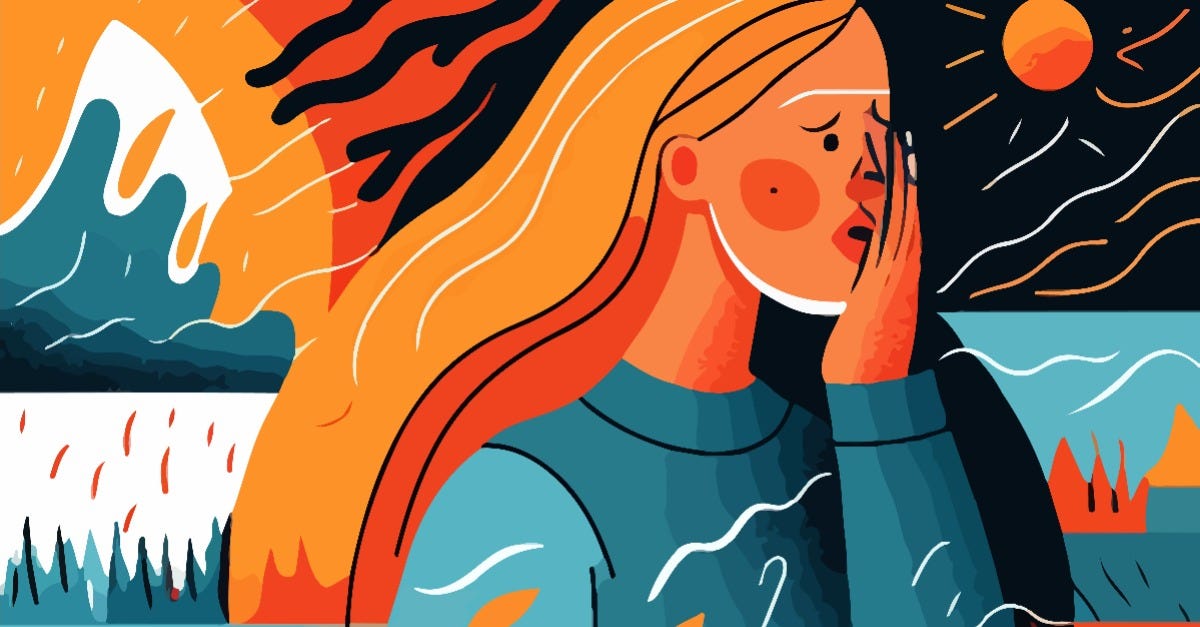
Eco anxiety, also known as climate anxiety, has rapidly emerged as one of the most discussed mental health topics globally. For example, in the past 48 hours, Google search trends and international media coverage have highlighted growing public concern about the psychological impact of climate change. This is not a passing worry. For many people, especially younger generations, eco anxiety is becoming a persistent emotional state that affects sleep, mood, concentration, and future planning.
Unlike many traditional anxiety presentations, eco anxiety is rooted in very real, observable threats. Rising global temperatures, extreme weather events, wildfires, floods, and daily exposure to climate-related news have made environmental danger feel immediate and personal. As a result, mental health professionals are increasingly recognising eco anxiety as a significant emotional response that deserves understanding rather than dismissal.
What Is Eco Anxiety?
Eco anxiety refers to ongoing fear, distress, or worry about the future of the planet and humanity due to climate change and environmental destruction. It is not currently classified as a mental health disorder, but it is widely recognised by psychologists as a legitimate emotional reaction to ecological threat.
The American Psychological Association defines eco anxiety as a “chronic fear of environmental doom.” Importantly, this fear is not irrational. It is grounded in scientific evidence and lived experience. People experiencing eco anxiety often report symptoms similar to other anxiety conditions, including restlessness, racing thoughts, difficulty sleeping, irritability, and a sense of helplessness.
Unlike generalised anxiety, which often attaches itself to hypothetical or exaggerated threats, eco anxiety is linked to concrete global events that are repeatedly reinforced by news, social media, and lived environmental change.
Why Eco Anxiety Is Trending Now?
Eco anxiety is trending because climate change is no longer an abstract future risk. It is being experienced in the present. Extreme heatwaves, flooding across Europe, wildfires in North America, and food supply concerns have all contributed to a heightened sense of vulnerability.
Recent research published in Nature Climate Change highlights that young people across multiple countries report intense worry, sadness, anger, and powerlessness about climate change. Many feel that governments are failing to act, which further deepens anxiety and mistrust about the future.
Increased media exposure also plays a role. Constant alerts, videos, and headlines can overwhelm the nervous system, keeping the brain in a prolonged state of threat activation. This ongoing stress response can mirror patterns seen in chronic anxiety disorders.
Who Is Most Affected by Eco Anxiety?
While eco anxiety can affect anyone, studies consistently show that children, adolescents, and young adults experience the highest levels of climate-related distress. This is partly because they are more aware that climate consequences will shape their adult lives.
People who are highly conscientious, empathic, or socially engaged may also be more vulnerable. Many report feelings of guilt, shame, or responsibility for environmental harm, even when they have little personal control over global systems.
Those already living with anxiety disorders, OCD, or trauma histories may find that eco anxiety intensifies existing patterns of worry and rumination. The sense that the threat is inescapable can be particularly destabilising for individuals who struggle with uncertainty.
How Eco Anxiety Interacts With Other Anxiety Conditions
Eco anxiety often overlaps with generalised anxiety disorder, health anxiety, and obsessive-compulsive patterns. The brain processes environmental threat in the same fear circuitry that responds to personal danger. This means eco anxiety can amplify hypervigilance, catastrophising, and a constant scanning for bad news.
For some people, eco anxiety fuels compulsive checking behaviours, such as repeatedly reading climate reports or tracking environmental data. For others, it can lead to emotional numbing or avoidance as a way to cope with overwhelm.
Crucially, clinicians emphasise that eco anxiety should not be pathologised automatically. Feeling distressed about climate change does not mean something is wrong with you. It often means your nervous system is responding appropriately to prolonged threat without adequate reassurance or agency.
Healthy Ways to Cope With Eco Anxiety
Acknowledging eco anxiety is the first step. Suppressing or minimising these feelings often increases distress. Naming the anxiety helps people feel less isolated and more understood.
Limiting exposure to distressing news is also important. This does not mean ignoring climate change, but rather setting boundaries around when and how information is consumed. Constant “doomscrolling” keeps the brain in survival mode and reduces emotional resilience.
Turning anxiety into meaningful action can be grounding. Research shows that engaging in community initiatives, environmental volunteering, or advocacy can reduce feelings of helplessness and restore a sense of agency.
Connecting with others is equally vital. Shared concern, when held in supportive relationships, is far less overwhelming than carrying it alone. Therapy can also provide space to explore eco anxiety safely, particularly when it begins to interfere with daily functioning.
Mindfulness-based approaches, nervous-system regulation, and values-focused therapy can help individuals hold concern for the planet without becoming consumed by fear.
Why Eco Anxiety Matters for Mental Health Going Forward
Eco anxiety is not a fringe issue. It represents a growing intersection between environmental reality and psychological well-being. As climate change continues to shape daily life, mental health services will increasingly need to recognise and respond to climate-related distress.
Supporting eco anxiety is not about telling people “everything will be fine.” It is about helping individuals tolerate uncertainty, reconnect with meaning, and build emotional resilience in a changing world.
By understanding eco anxiety, we move towards a more compassionate, realistic, and psychologically informed response to one of the defining challenges of our time.
Frequently Asked Questions About Eco Anxiety (FAQ’s)
Is eco anxiety a mental illness?
Eco anxiety is not classified as a mental illness. It is a natural emotional response to real and ongoing concerns about climate change and the future of the planet. Many people experience it as worry, sadness, or a sense of unease rather than a diagnosable condition. It becomes a problem only when the anxiety feels constant, overwhelming, or starts to interfere with daily life.
Why does thinking about climate change make my anxiety feel physical?
When the brain perceives threat, it activates the nervous system. With eco anxiety, repeated exposure to climate-related news can keep the body in a heightened state of alert. This may show up as tension, a tight chest, restlessness, fatigue, or difficulty sleeping. These sensations are signs of the body trying to protect you, not signs that something is wrong with you.
Can therapy really help with eco anxiety?
Yes. Therapy can help people understand how eco anxiety affects their thoughts, emotions, and nervous system. Rather than trying to remove concern about the environment, therapy focuses on helping people feel more grounded, less overwhelmed, and better able to live alongside uncertainty without constant fear or rumination.
References For Further Reading
American Psychological Association – Climate Change and Mental Health
Wikipedia – Eco-Anxiety
Nature Climate Change – Climate Anxiety in Children and Young People (2021)
Nature Reviews Psychology – Mental Health and Climate Change